
Affiliate publishing has always had a strange paradox.
On the surface, it looks simple:
Write content → add links → earn commissions.
In reality, the work behind those links becomes a constant part of the workflow.
Most affiliate publishers already use tools to help with affiliate link management:
- affiliate network dashboards
- deeplink generators
- link tracking tools
- analytics dashboards
They help generate affiliate links, but they don’t remove the manual work.
You still have to:
- generate links
- implement them
- maintain them when campaigns change
Across hundreds or thousands of pages, link management quietly becomes a large part of running an affiliate site. This is where a new approach is starting to replace the old workflow: affiliate link automation.
Instead of manually creating and maintaining links, publishers can now insert normal outbound links while a system connects them to active affiliate campaigns automatically.
For publishers trying to scale content and monetization, this change can remove a surprising amount of manual work.
Key Takeaways
- Affiliate link management traditionally requires generating links through deeplink generators.
- Manual link creation and maintenance becomes difficult across large content libraries.
- Affiliate link automation allows publishers to insert normal outbound links while the system connects them to active campaigns automatically.
- Automation removes much of the manual work involved in maintaining affiliate links across hundreds or thousands of pages.
What Is Affiliate Link Management?
Affiliate link management refers to the process of creating, implementing, tracking, and maintaining affiliate links across a publisher’s website.
For most publishers, this includes:
- generating affiliate links through networks
- adding tracking parameters
- inserting links into articles or pages
- tracking clicks and commissions
- maintaining links when campaigns change
This process works well when a site is small.
But as content grows and publishers start working with multiple affiliate networks, link management becomes a much bigger operational task. The goal of modern affiliate link management tools is to simplify this process and make monetization easier to maintain as websites scale.
What Is a Deeplink Generator?
A deeplink generator is a tool provided by affiliate networks that allows publishers to create tracking links that send visitors to a specific advertiser page.
Publishers typically paste a product or landing page URL into the generator, which then adds tracking parameters so commissions can be attributed to the publisher. These links are commonly used in blog posts, product comparisons, travel guides, and other affiliate content.
While deeplink generators simplify the creation of affiliate links, publishers still need to manually generate, implement, and maintain these links across their content. As websites grow and campaigns change, this manual process becomes harder to manage, which is why many publishers eventually start looking for automation solutions.
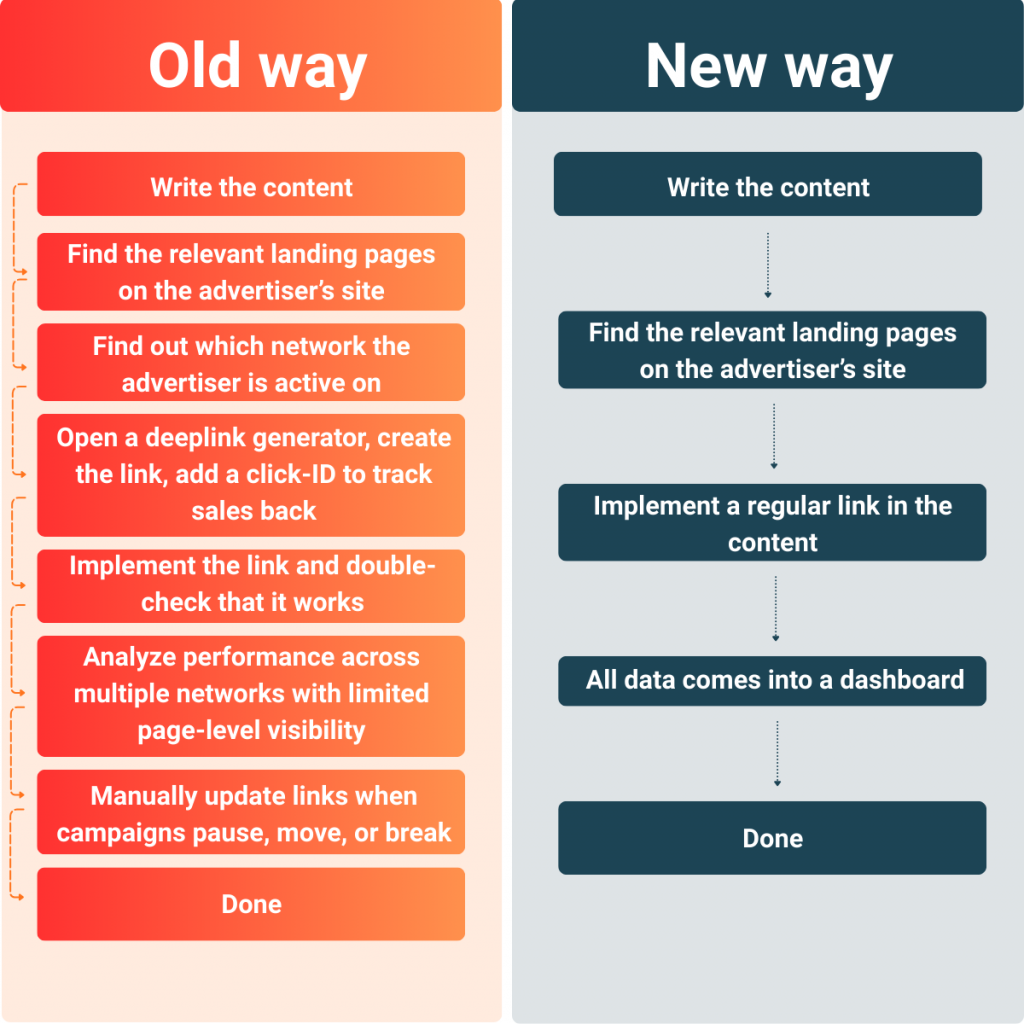
The Traditional Workflow: Creating Affiliate Links With Deeplink Generators
Most affiliate publishers know this workflow well. It usually looks something like this:
- Find the advertiser landing page
- Identify which affiliate network the advertiser uses
- Open the deeplink generator in that network
- Generate the affiliate tracking link
- Add tracking parameters or click IDs
- Insert the link into the article
- Maintain links when campaigns change networks
This process works. But it also means every single link requires manual effort. Now multiply that by:
- hundreds of articles
- thousands of links
- multiple affiliate networks
At that point, affiliate link management becomes maintenance work rather than growth work.
This is basically all the steps publishers usually take to monteize their article. And you can see the comparison between an old way of doing it and the new way, which includes automated link management.
Why Deeplink Generators Become Difficult to Maintain at Scale
Deeplink generators solve one problem: creating affiliate links. But they don’t solve the problem of maintaining those links over time. Several things start to happen as a site grows.
One common issue publishers face is campaigns moving between affiliate networks. A publisher might already be approved for the advertiser, but when the campaign moves from one network to another, the original tracking links no longer point to an active campaign.
The traffic intent hasn’t changed. But technically, the link stops generating commission. This means publishers often need to:
- revisit old content
- generate new links
- update pages manually
For sites with hundreds or thousands of pages, this becomes a constant background task. And most importantly, it’s time that doesn’t create new revenue. It simply keeps the system running.
What Is Affiliate Link Automation?
Affiliate link automation is a system that automatically connects outbound links on a publisher’s website to active affiliate campaigns without manually generating tracking links.
Instead of creating affiliate links through network tools, publishers insert normal outbound links to advertiser pages. The automation system then detects those links, matches them with campaigns the publisher is approved for, and attaches the necessary tracking parameters automatically.
This means clicks can be tracked and monetized without manually creating or updating affiliate links. When campaigns move between networks or change status, the system keeps links aligned automatically, reducing the need for manual link maintenance.
The technical complexity of affiliate tracking still exists. But instead of the publisher handling it manually on every page, the system manages that complexity in the background.
This is how the link automation works in practice:
How Do Publishers Automate Affiliate Links?
Publishers automate affiliate links by using affiliate link management tools that automatically match outbound links with active affiliate campaigns.
Instead of generating tracking links manually through affiliate networks, the system works by detecting advertiser links inside the content and connecting them to the correct affiliate campaign.
The automation process typically includes:
- Detecting outbound links on the page
- Matching them with affiliate programs the publisher is approved for
- Automatically attaching tracking parameters
- Tracking clicks and commissions in a central dashboard
This allows publishers to focus on creating content while the system handles link monetization and maintenance in the background.
How Affiliate Link Automation Automatically Converts Links Into Affiliate Links
With automation, the workflow becomes much simpler. Instead of building links manually, the process looks like this:
- The publisher writes the article
- Normal outbound links to advertiser pages are inserted
- The system detects those links automatically
- Links are matched with active affiliate campaigns
- Clicks and revenue are tracked automatically
In other words, the publisher focuses on content while the system handles the technical side of affiliate linking. This approach automatically converts links to affiliate links without requiring publishers to generate deeplinks individually. The result is a workflow that:
- removes manual link generation
- eliminates the need for deeplink generators
- keeps campaigns aligned automatically
Another benefit is that links remain clean and consistent on the page. Instead of redirect-style links that pass through third-party tracking servers, automated systems like Nordpar keep links appearing as part of the advertiser’s domain, which helps maintain a cleaner user experience and more trustworthy-looking links.
Affiliate Link Automation vs Deeplink Generators
Affiliate Link Automation vs Deeplink Generators
A side-by-side comparison of manual linking processes versus automated affiliate solutions.
This shift represents the evolution of affiliate link management.
Instead of manually maintaining links across content libraries, automation allows publishers to keep monetization active while reducing operational workload.
Use Case: How a Travel Publisher Reduced Link Work by 40%
A good example of this shift comes from Rejs365, one of Denmark’s larger travel affiliate publishers. The team already had strong traffic and steady affiliate revenue. They also used the standard tools available to publishers:
- affiliate networks
- analytics platforms like Google Analytics and PowerBI
- deeplink generators
But link management still consumed a significant amount of time. Every new article required:
- finding the right campaign
- generating deeplinks
- implementing tracking links
- maintaining links when campaigns moved networks
Across hundreds of pages, this maintenance work became a constant part of their workflow.
After implementing Nordpar’s link automation, the workflow changed. Instead of generating affiliate links manually, they simply added normal outbound links to advertiser pages.
The system automatically connected those links to active affiliate campaigns the publisher was approved for. Clicks were tracked automatically. Campaign changes were handled automatically.
The result:
around 40% of the manual work involved in creating and maintaining affiliate content was removed.
That time is now spent on producing new content instead of maintaining old links.
How Do Publishers Monetize Outbound Links?
Publishers monetize outbound links by connecting them to affiliate programs that track clicks and sales generated through their content. When a visitor clicks an affiliate link and completes a purchase or booking, the publisher earns a commission from the advertiser.
Traditionally, publishers had to create these affiliate links manually using network tools like deeplink generators. However, newer affiliate link automation systems allow publishers to insert normal outbound links while the system automatically connects them to active affiliate campaigns.
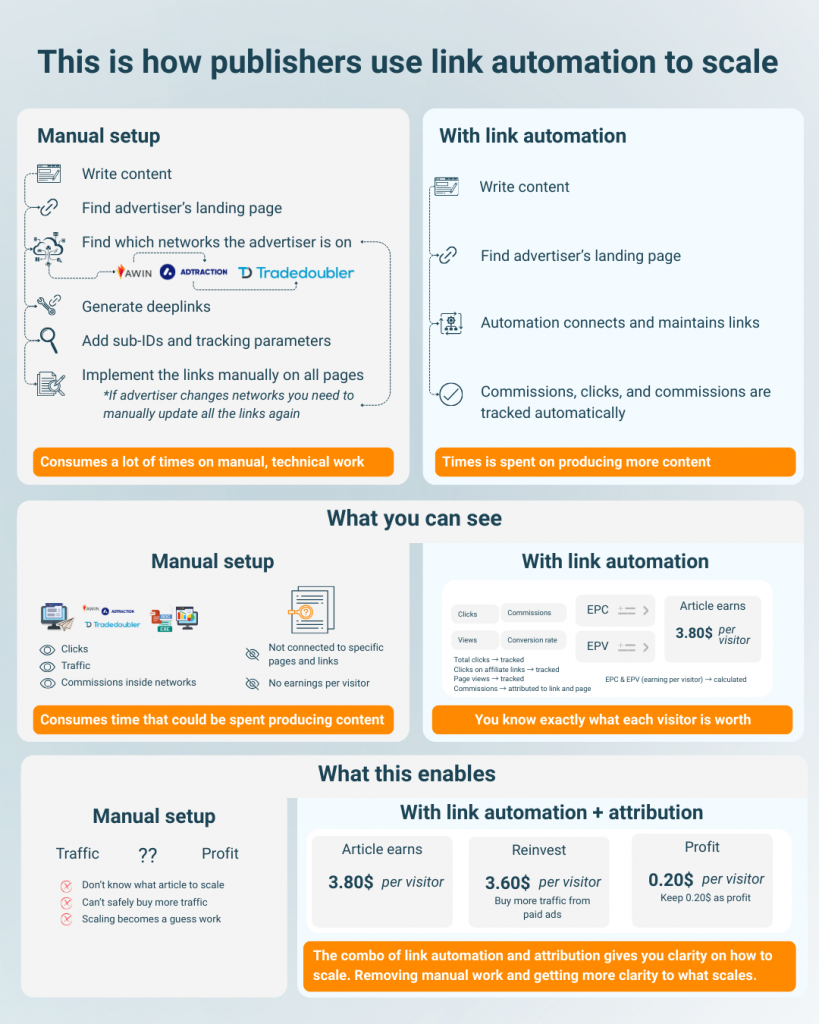
When this data is combined with detailed attribution, publishers can also measure metrics like Earnings per Click (EPC) and Earnings per Visitor (EPV). That insight changes how content decisions are made.
If an article earns a certain amount per visitor, publishers can:
- identify which pages deserve more content
- understand the real value of their traffic
- even calculate how much they can spend to acquire visitors profitably
This infographic shows the differences and opportunities that publishers unlock when they use affiliate link automation.
When Affiliate Link Automation Becomes Necessary
For smaller sites, manual link management can work. But as publishers grow, certain patterns start to appear. Automation becomes useful when publishers are:
- managing hundreds or thousands of pages
- working with multiple affiliate networks
- maintaining older content libraries
- scaling affiliate publishing operations
At that point, the challenge isn’t creating content. The challenge becomes maintaining everything behind it. Automation removes that friction by moving the technical complexity into the system rather than leaving it with the publisher.
From Deeplink Generators to Automated Affiliate Link Management
Affiliate publishing has traditionally relied on manual tools like deeplink generators. They solved the first challenge: creating affiliate links. But they didn’t solve the second challenge: maintaining those links over time. As sites grow and campaigns change, link management becomes a larger operational task.
Affiliate link automation changes that model.
Instead of manually generating and maintaining links, publishers can insert normal outbound links while the system connects them to active affiliate campaigns and keeps monetization working in the background.
For publishers focused on scaling content and revenue, that shift means spending less time on link maintenance and more time growing the content that drives traffic and earnings.